
By Town Center Dental . 25 February, 2026 .
When you’re facing tooth loss due to injury, decay, or gum disease, choosing the right replacement option is an important decision. Two of the most trusted solutions in modern dentistry are dental implants and dental bridges. While both can restore your smile and chewing ability, they function in very different ways.
In this blog, you’ll learn the key differences and benefits of these two modern tooth replacement options, helping you determine which solution is best suited for your needs.
Understanding These Two Tooth Replacement Options
Dental Implants
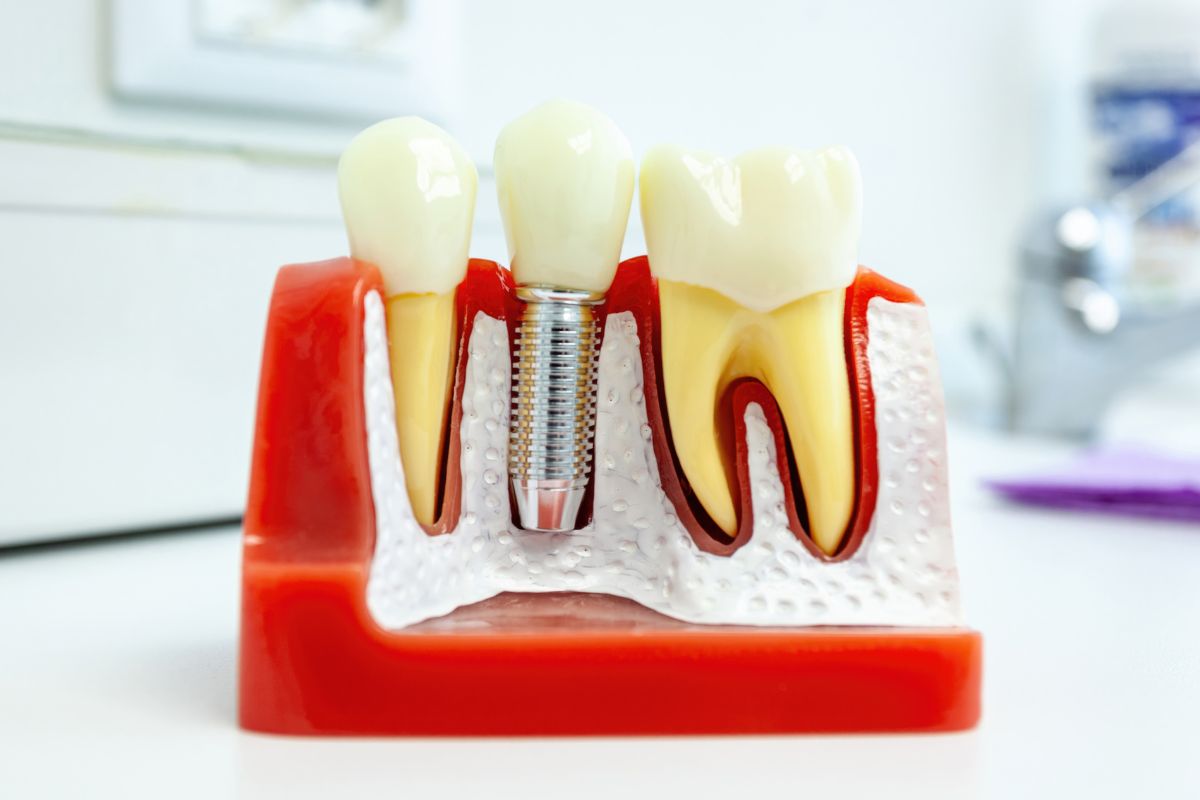
A dental implant replaces a missing tooth from root to crown. A small titanium post is surgically placed into the jawbone, where it gradually fuses with the bone over several months. Once fully integrated, a custom dental crown is attached to the implant, creating a natural-looking and fully functional tooth. Implants are independent, self-supporting, and designed to last decades with proper care.
Dental Bridges
A dental bridge fills the gap left by a missing tooth by anchoring one or more artificial teeth (called pontics) to crowns on the adjacent healthy teeth. The surrounding teeth provide support, holding the bridge in place. While bridges are effective at restoring a smile, they rely on neighboring teeth for stability and require these teeth to be permanently shaped for crowns.
Key Difference: Implants are self-supporting, while bridges depend on surrounding teeth.
Treatment Timeline: How Long Does It Take?
If timing is a priority, dental bridges typically offer a faster solution. Most bridges can be completed within two to three dental visits over a few weeks. After preparing the supporting teeth and taking impressions, your custom bridge is placed and adjusted for comfort.
Dental implants require more patience. After the titanium post is placed, the jawbone needs time to heal and integrate with the implant, usually 2 to 6 months. Once healing is complete, the final crown is attached. While implants take longer, many patients feel the long-term benefits outweigh the extended timeline.
Impact on Neighboring Teeth
One important factor to consider is how each option affects your existing teeth.
To place a traditional bridge, the adjacent healthy teeth must be reshaped to accommodate crowns. This involves permanently removing enamel, and those teeth will always require crown protection moving forward.
Dental implants, on the other hand, do not impact neighboring teeth at all. They function independently and preserve the natural structure of surrounding teeth. For patients with healthy adjacent teeth, this preservation is often a significant advantage.
Jawbone Health and Long-Term Stability
After tooth loss, the jawbone in that area begins to shrink due to a lack of stimulation. This bone loss can eventually affect facial structure and overall oral health.
Dental implants help prevent this issue. Because they replace the tooth root, implants stimulate the jawbone during chewing, maintaining bone density and preserving facial contours.
Dental bridges do not provide this benefit. While they restore the visible portion of the tooth, they do not replace the root, so bone loss in that area can continue over time.
Daily Maintenance and Care
Dental implants are easy to maintain. Once healed, you care for them just like natural teeth, brushing, flossing, and routine dental checkups.
Dental bridges require a bit more attention. Cleaning underneath the bridge requires special floss threaders or water flossers to prevent plaque buildup. Proper hygiene is essential to protect the supporting teeth and prevent decay.
When a Dental Implant May Be a Better Option
Dental implants are often considered the gold standard for tooth replacement due to their long-term benefits and natural functionality. They may be the better option if you want:
- Preservation of Jawbone Health: Implants stimulate the jawbone, preventing bone loss and maintaining facial structure.
- Protection of Adjacent Teeth: Unlike bridges, implants do not require reshaping neighboring teeth, preserving their natural structure.
- Durability and Longevity: Designed to last decades, implants provide a reliable, long-lasting solution.
- Improved Comfort and Functionality: Implants stay securely in place, offering stable support for chewing, speaking, and smiling without the risk of slipping.
- Single or Non-Adjacent Tooth Replacement: Ideal for replacing one tooth or multiple teeth in separate areas.
While implants require surgery and a longer timeline, their benefits often outweigh these factors for patients seeking a permanent, natural-looking solution.
Making the Right Choice
Choosing between a dental implant and a bridge depends on several important factors:
- Overall health and medical history
- Condition and density of the jawbone
- Health of surrounding teeth
- Budget and long-term dental goals
- Lifestyle and availability for treatment
A consultation with an experienced dentist in Linden is essential to evaluate your unique needs and guide you toward a confident, well-informed decision.
Restore Your Smile with Confidence
At Town Center Family Dental, we provide personalized care for tooth replacement, whether it’s a dental implant or a bridge. Our dental team works closely with each patient to ensure the solution aligns with your oral health, comfort, and lifestyle.
Don’t let missing teeth affect your confidence or oral health. Schedule a consultation with our Linden office today and take the first step toward a stronger, healthier, and more beautiful smile.
FAQs About Dental Implants vs. Dental Bridges
1. Are dental implants more painful than dental bridges?
Dental implant placement is a minor surgical procedure, so some discomfort is expected during the healing process. However, most patients report manageable soreness similar to a tooth extraction. Bridges typically involve less discomfort since they do not require surgery.
2. How long do dental implants and dental bridges last?
Dental implants can last 20 years or more, often a lifetime, with proper care and regular dental visits. Dental bridges usually last 10–15 years, depending on oral hygiene and the health of supporting teeth.
3. Are dental implants safe for everyone?
Dental implants are safe for most healthy adults, but adequate jawbone density and good overall health are necessary. Certain medical conditions or smoking habits may affect candidacy, which is why a professional evaluation is important.
4. Can dental implants fail?
Although dental implants have a high success rate, failure can occur due to infection, poor oral hygiene, or insufficient bone support. Proper aftercare and regular dental checkups greatly reduce this risk.
5. Do dental bridges look natural?
Yes, modern dental bridges are custom-made to match the color, shape, and size of your natural teeth. When properly fitted, they blend seamlessly with your smile and restore both appearance and function.