
By Town Center Dental . 25 February, 2026 .
An overbite may not seem like a serious issue at first, especially if it isn’t causing noticeable pain or discomfort. Many people live with it for years, assuming it’s simply a natural part of their smile. However, over time, an untreated overbite can affect how your teeth align, cause uneven wear, and even affect everyday functions like chewing and speaking comfortably.
With modern orthodontic treatments, both adults and teens are exploring alternatives to traditional braces. Clear aligners have grown in popularity, but an important question remains here: Can Invisalign truly correct an overbite? Let’s take a closer look in a clear and easy-to-understand way.
What Is an Overbite and Why Does It Matter?
An overbite occurs when the upper front teeth significantly overlap the lower front teeth. While a small amount of overlap is completely normal, a deep or excessive overbite can create long-term oral health concerns. Over time, it may contribute to jaw pain and discomfort, uneven tooth wear or enamel damage, and even speech difficulties. In some cases, it can also increase the risk of cavities and gum problems due to improper tooth alignment. Additionally, a pronounced overbite may lead to TMJ-related symptoms, such as jaw tension, clicking, or jaw soreness.
Overbites can range from mild to severe, and the most effective treatment depends on the complexity of the individual case and the underlying cause of the misalignment.
Common Causes of an Overbite
Overbites don’t usually develop overnight. They’re often influenced by a combination of factors, including:
- Genetics and jaw shape
- Childhood habits such as thumb sucking or prolonged pacifier use
- Teeth crowding or spacing issues
- Jaw growth that didn’t develop evenly
Because every mouth is different, the cause of an overbite can affect how it’s treated.
How Invisalign Works to Correct an Overbite
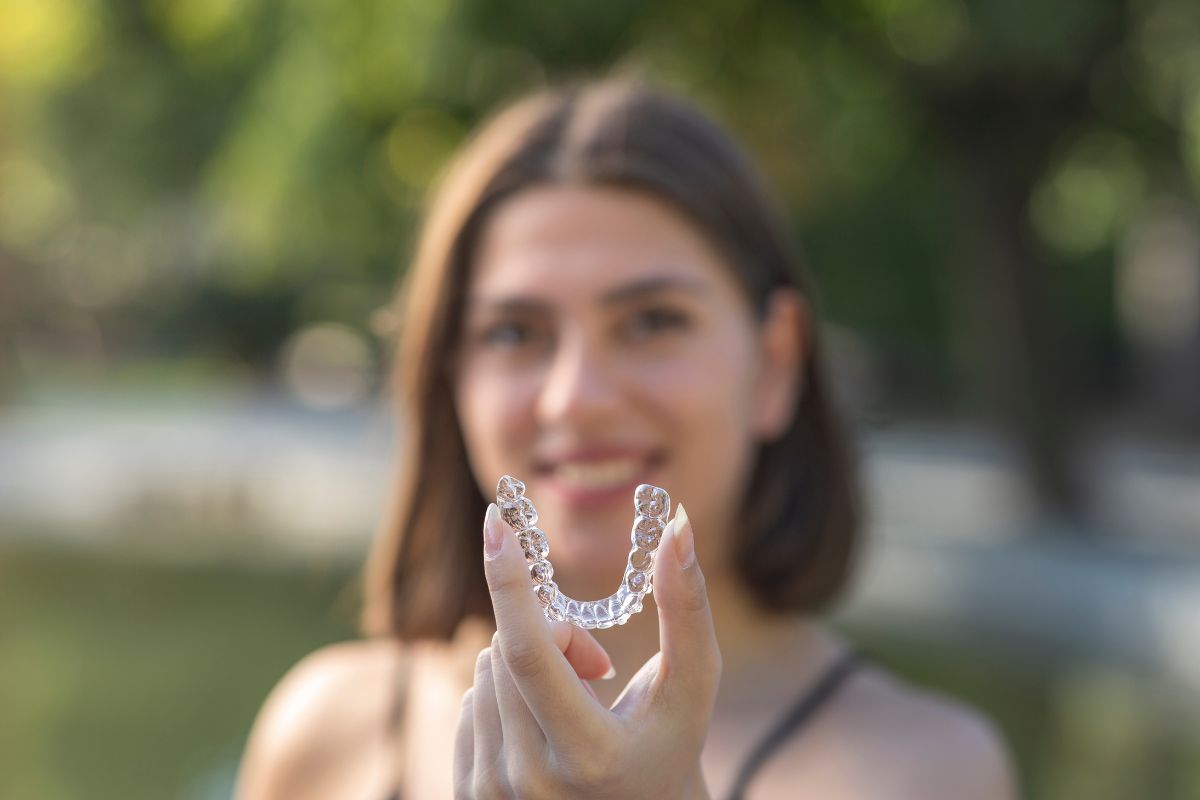
Invisalign uses a series of custom-made, clear aligners that gradually shift your teeth into their ideal positions. These aligners are created using advanced 3D digital imaging technology, allowing your dentist to map out a precise treatment plan.
To correct an overbite, Invisalign may:
- Move the upper teeth backward
- Bring the lower teeth forward
- Intrude (gently push down) upper front teeth
- Use small attachments to improve tooth movement
- Incorporate elastics (in some cases) to guide jaw alignment
Each set of aligners is worn for about one to two weeks before progressing to the next stage. Over time, your bite alignment improves gradually.
Is Invisalign Effective for All Overbites?
Invisalign is highly effective for many mild to moderate overbites, especially when the issue is primarily related to tooth positioning rather than significant jaw misalignment.
Patients with properly developed jaw structures often respond very well to clear aligner therapy. However, more severe skeletal overbites may require additional orthodontic treatment or, in rare cases, surgical intervention.
The best way to determine if Invisalign is right for you is through a comprehensive consultation. At Town Center Family Dental in Flint, we use detailed digital scans and bite analysis to evaluate your specific needs and recommend the most effective solution.
Benefits of Invisalign Treatment
Many patients choose Invisalign because it fits seamlessly into everyday life. Benefits include:
- Nearly invisible aligners
- Removable trays for easier brushing and flossing
- No food restrictions
- Smooth edges that reduce irritation
- Fewer office visits compared to traditional braces
For teens and adults who want a discreet, comfortable solution, Invisalign can be an excellent option.
Schedule Your Overbite Evaluation Today
At Town Center Family Dental, we understand that bite alignment affects more than just appearance; it impacts long-term oral health and comfort. Our expert dental team takes the time to carefully assess your bite, clearly explain your options, and design a personalized treatment plan that delivers lasting results.
If you’re considering Invisalign to correct an overbite, we invite you to schedule a consultation at our Flint dental office. We’re here to answer your questions and help you achieve a healthier, more confident smile.
FAQs About Correcting an Overbite with Invisalign
1. Can Invisalign really fix an overbite?
Yes, Invisalign can effectively correct many mild to moderate overbites by gradually shifting teeth into proper alignment. The success of treatment depends on the severity of your case.
2. How long does Invisalign take to correct an overbite?
Treatment usually takes between 6 and 18 months. Mild cases may resolve sooner, while moderate cases may take longer. Consistent aligner wear is key to staying on schedule.
3. Is Invisalign better than braces for overbite correction?
Both Invisalign and traditional braces can be effective. Invisalign offers a more discreet and comfortable experience for many patients, but the best option depends on your specific bite condition.
4. Does Invisalign work for severe overbites?
Invisalign can treat many complex cases, but severe skeletal overbites may require additional orthodontic treatment. A professional consultation is necessary for an accurate evaluation.
5. Will fixing an overbite improve jaw pain?
Correcting an overbite can reduce jaw strain and relieve discomfort caused by uneven bite pressure. Results vary based on individual conditions.
6. Do I need rubber bands with Invisalign?
In some cases, small elastics are used with Invisalign to improve bite alignment. Your dentist will determine whether they are necessary for your treatment.
7. What happens after Invisalign treatment?
After completing treatment, wearing a retainer is essential to maintain your new alignment. Retainers prevent teeth from shifting back and help protect your long-term results.